I build exhibits, games and installations that respond to the people using them. A player places a prop to solve a clue, a visitor changes an animated landscape by moving, or a child taps a screen to try a game. The projects below show how I designed those interactions and made the physical and digital parts work together.
Each case study says what my role was, when it happened, and how the interaction worked. Where the work was collaborative, I say so.
Escape Rooms · Portland, OR · 2019–2020
Escape Rooms, In Person
I worked as Manager at Mad Genius Escapes, an escape room company in Portland that ran themed rooms for the public. I helped design two of their games, one built for a room and one built to play over the internet when the rooms couldn't open, and I made the animation for a third. I also wrote the operating materials the staff used to run every game in the building.
We tested every new game with players before it opened, watching how they played and adjusting the puzzles and the hints around them. The goal was a puzzle hard enough that you had to connect things that don't normally go together, but solvable once you saw the connection.
Accessibility was part of every room. One room's big reveal was a hatch you crawled through, so we built another way through for anyone who couldn't crawl. We paid as much attention to how a group moves around the room as to the puzzles, and every room had to work for kids and for adults at different difficulty levels.
The building's rooms ran on networked Raspberry Pis, one per subsystem, with sensors and RFID triggering audio, video and lighting states. I ran and maintained those systems, and fixed them on the fly during live games. Most of those rooms were designed before I arrived. Unicorn Birthday Party is the one I helped design.
Interactive case study · Mad Genius Escapes · 2019–2020
Unicorn Birthday Party
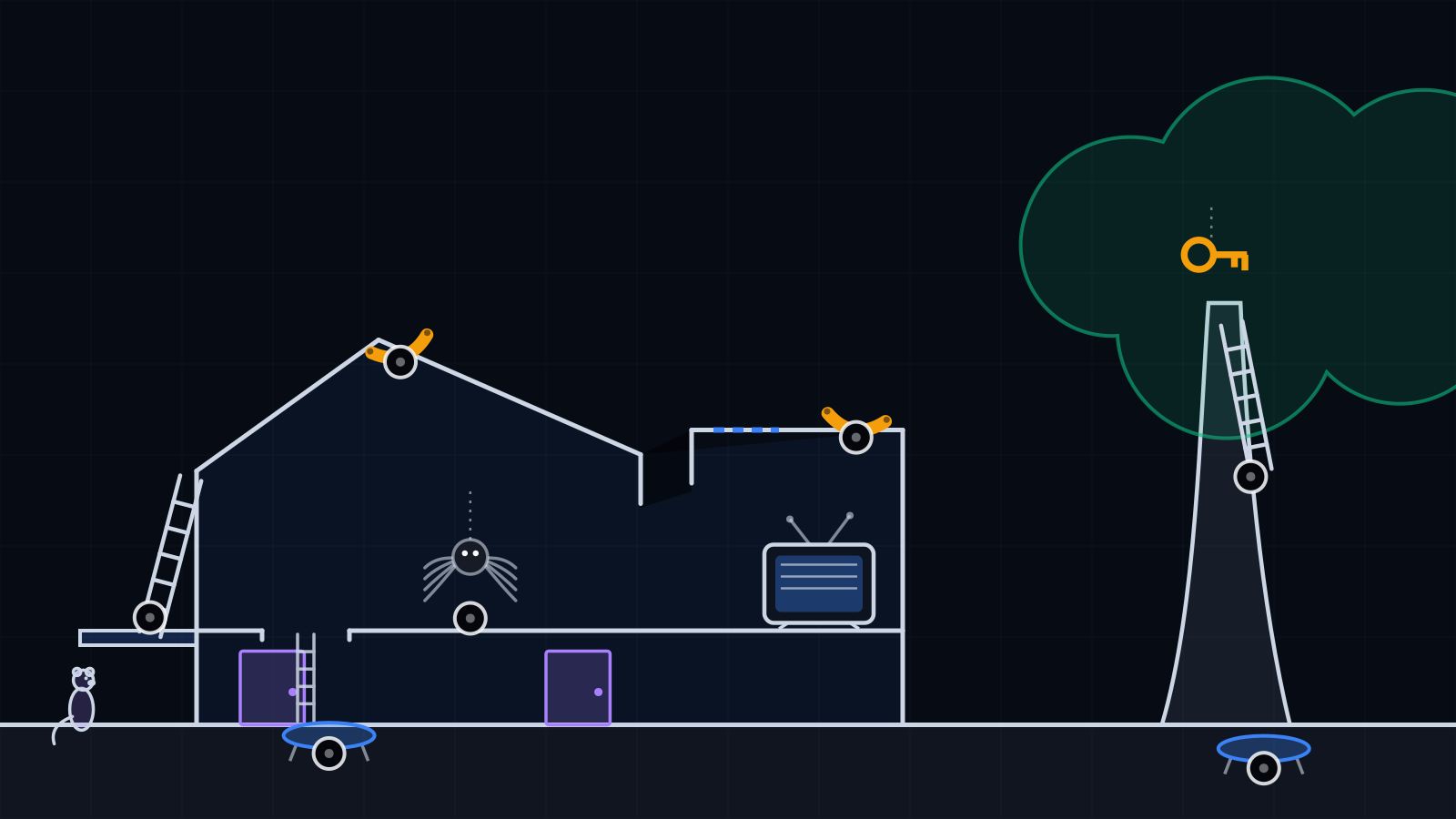
A projected platformer that crossed into the physical room. Players moved RFID-tagged props, the meerkat changed course, and the right arrangement released a real key.
Helped design the room · Created the meerkat animation
The room made it through beta testing and opened to the public, but bookings were limited before COVID closed the business.
Simplified interaction model0tags placed
1Choose an object
2Place its tag
3Run the route
Choose an RFID object, then place it on an anchor.
There is one of each object. The ladder lets him climb, the trampoline bounces him up a level, the banana sends him sliding, and the spider scares him home. If he reaches the television he sits down and the run is over. In the room, players kept moving the objects ahead of him as he walked. The example below plays that relay.
Schematic reconstruction My redrawing of the production board. The original cartoon artwork belongs to the room and is not mine to publish.
01Empty
02Empty
03Empty
04Empty
05Empty
06Empty
07Empty
The board above is my own redrawing of the production layout. The example follows the run the room was designed around, from memory; the free-play mode is a simplified model. Neither reproduces the original artwork or the deployed software.
Children and Families · Live
Building for Children and the People Teaching Them
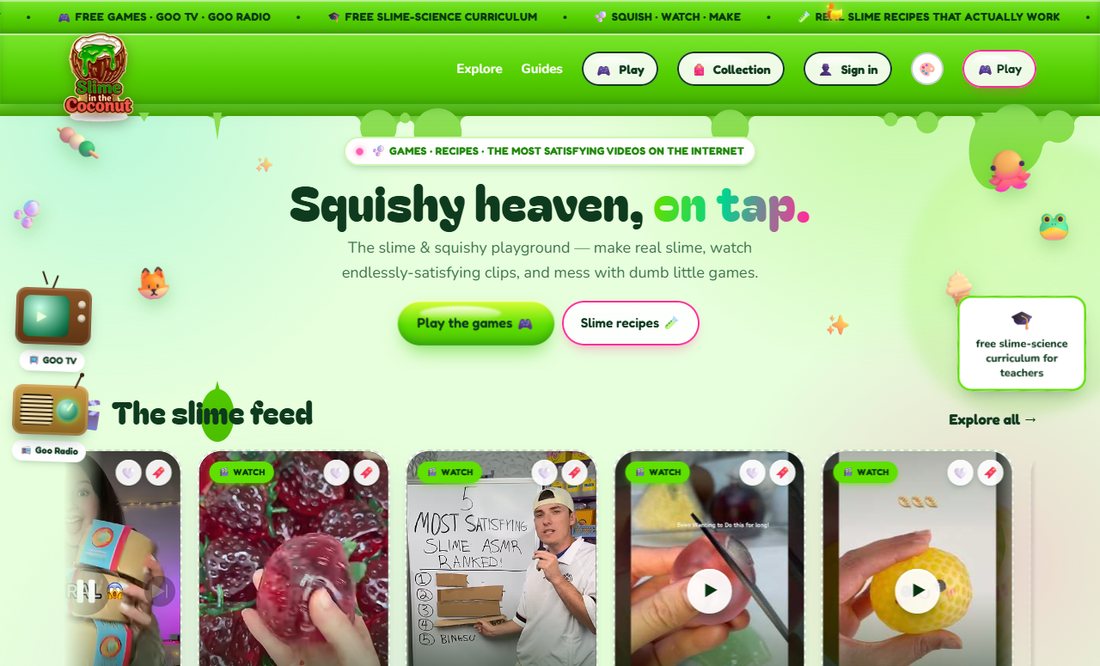
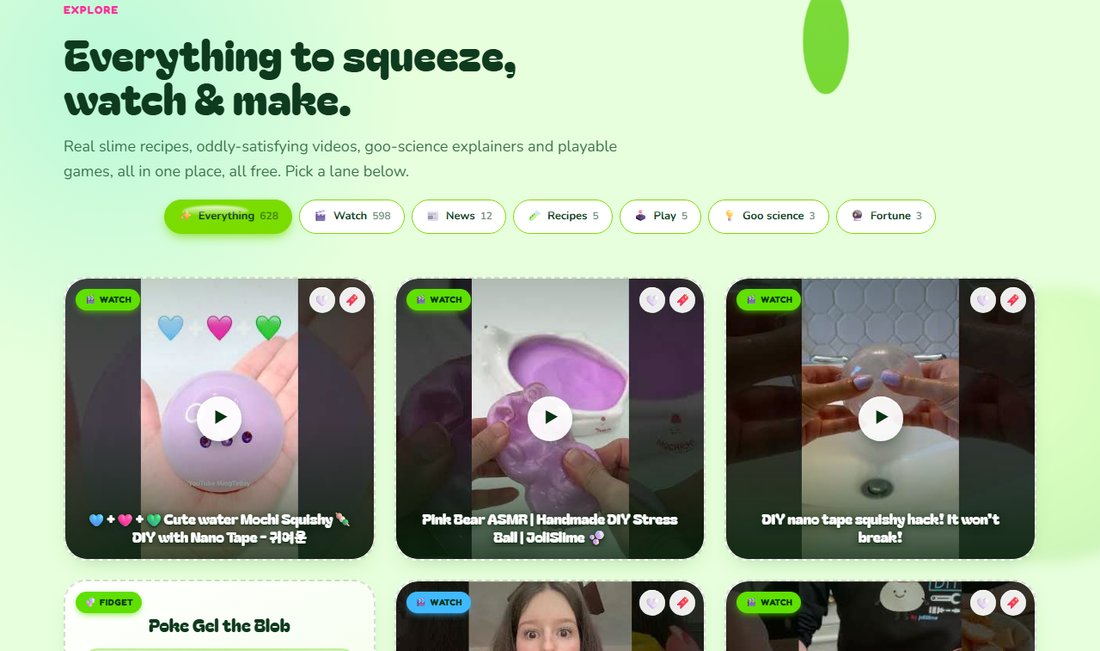
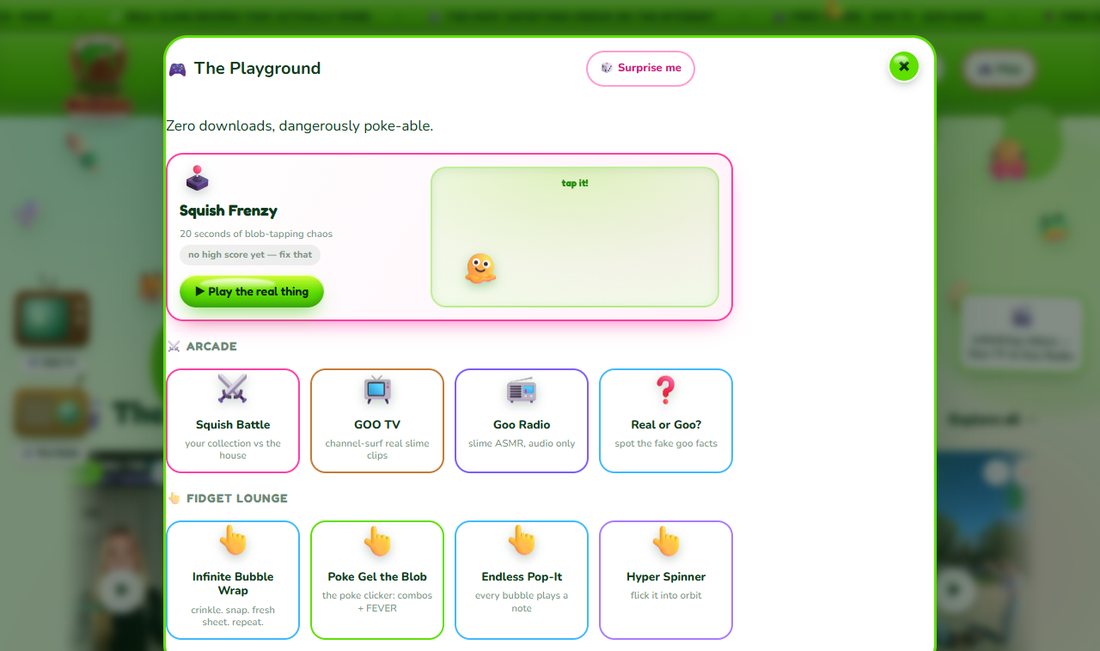
I designed and built Slime in the Coconut for people who enjoy making and playing with slime. It combines recipes, short videos and games that respond to a tap. I also wrote a free science curriculum for teachers, connecting the making with the polymer chemistry behind the material.
The home page. Everything a child can do is a large, obvious control, and the educator material sits in its own card so a teacher can find it.
Further down the same page, the library mixes recipes, clips and small games, and every card opens with a single tap.The games menu. Each entry is a colour-coded card with one line explaining it, and every game plays with taps alone, the same constraint as an exhibit interactive.
The Three-Level Ocean
K–8 school · 2025–2026 · Led the project
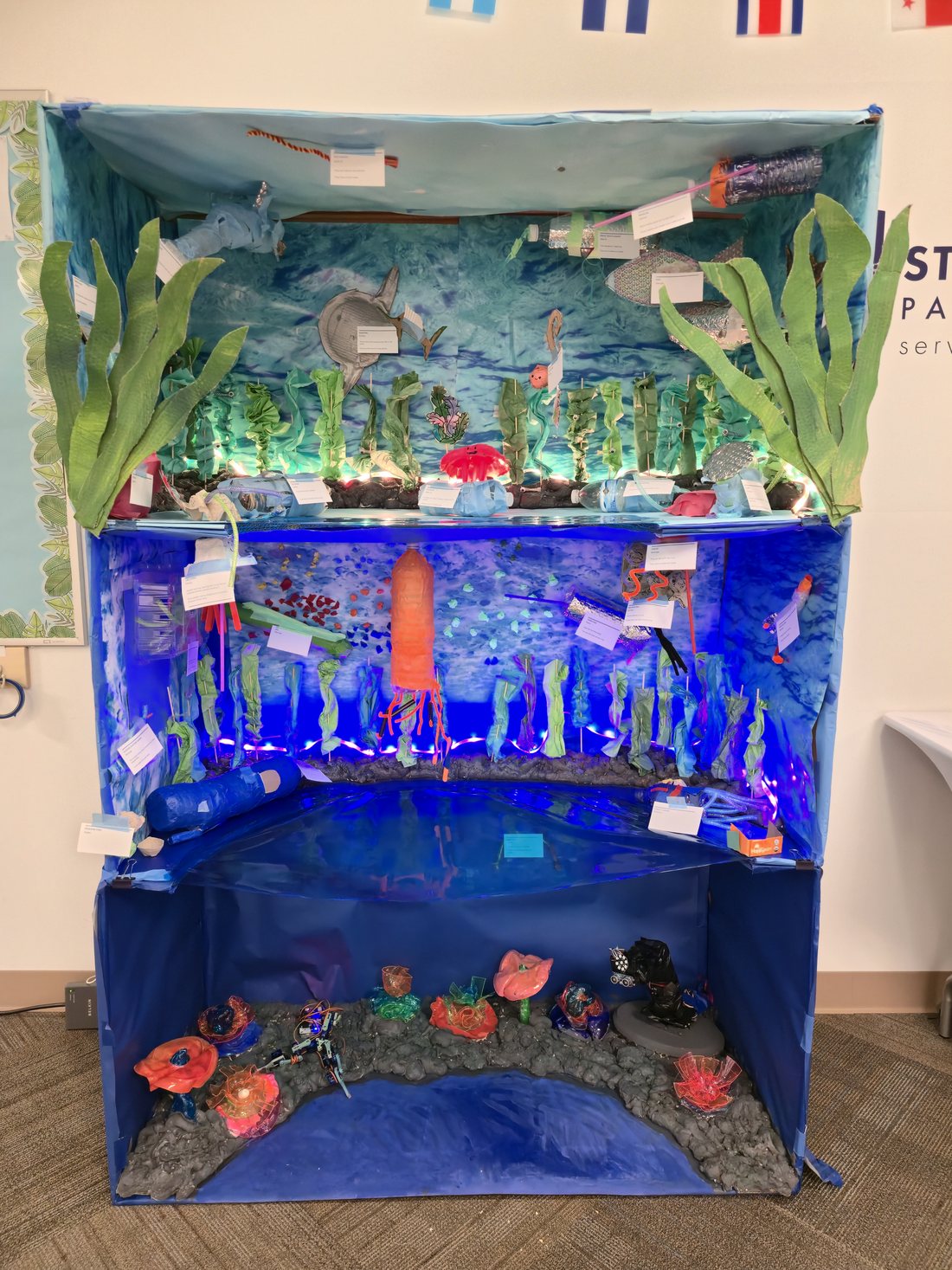
The three-level ocean was a year-long project at a K–8 school, built across grades during the 2025–2026 school year. Second graders built the top two zones. Fifth graders made the fluorescent coral on the sea floor, and seventh graders built animatronic sea creatures, each designed around a real animal's survival strategy. The creatures move, light up, make sound, and respond to what happens around them, and the piece kept changing all year as students added new ones. Around twenty different animatronic creatures passed through it by the end of the year.
The first version, with a couple of the sea creatures installed. Second grade built the upper zones, fifth grade the fluorescent coral, and seventh grade the creatures along the bottom.
The Transforming House
K–8 school · 2025–2026 · Led the build
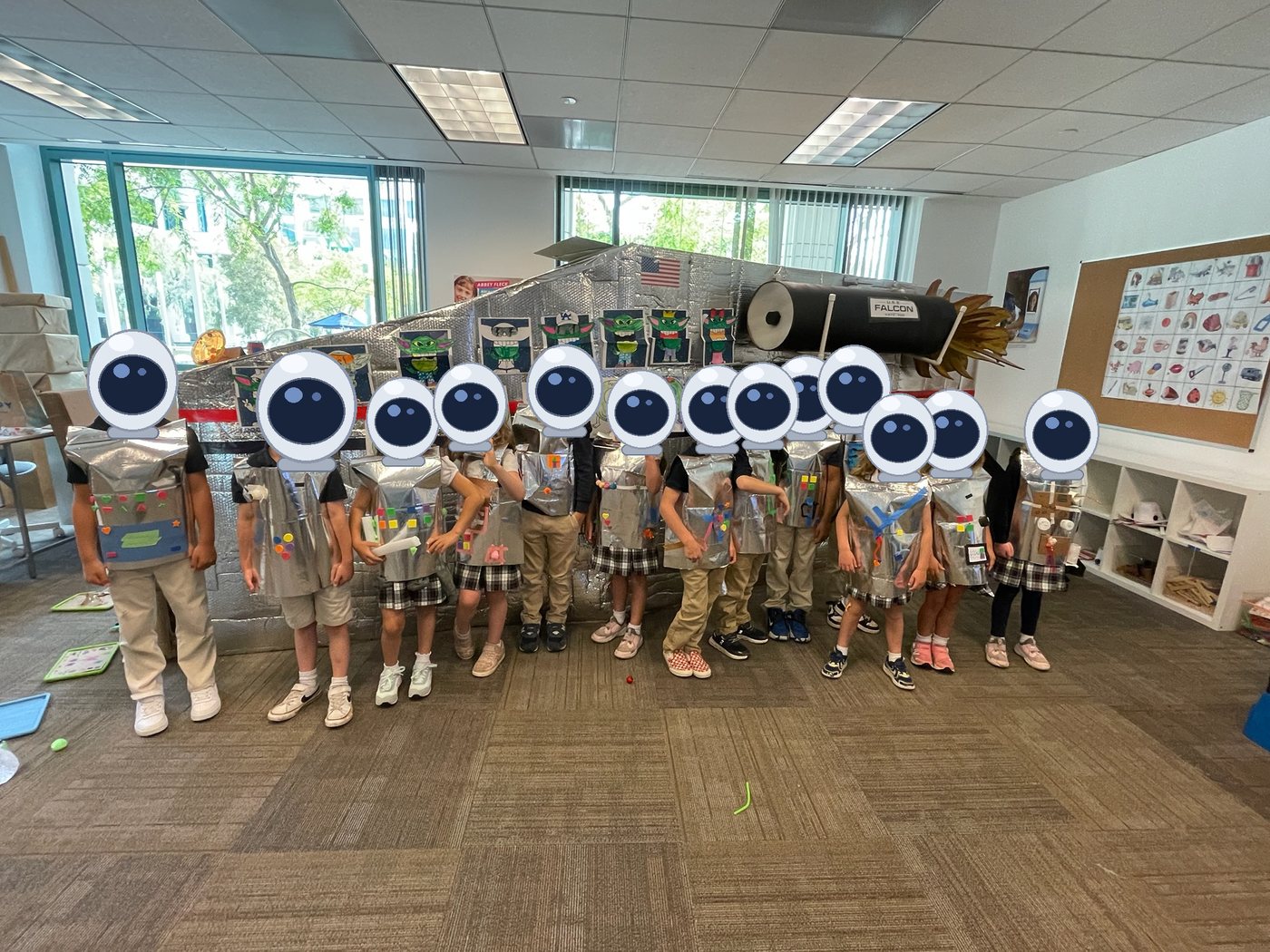
The students also built a big structure for the lower school that changed three times over the year. It started as a friendship house, where the younger kids left recorded messages and decorated it with moving props. Then it became a haunted house full of animatronics the students made. After that it turned into a spaceship, with working controls and escape-room puzzles.
An animatronic monster pumpkin from the haunted-house version, designed by fifth graders. When its PIR sensor detects someone moving nearby, servo motors and a linear actuator open the mouth and wag the tongue.The spaceship from outside, with kindergarteners in the space suits the second graders designed for them and their artwork on the hull of the U.S.S. Falcon. The space helmets are drawn onto the photo.Escape Rooms · Remote · 2020
Remote Escape Games
The Truth About Edith
Remote · Helped design
I helped design this remote escape game, built during COVID-19 so groups could play from their own homes. Four players join in a browser, and each gets a different role: three run colour-coded instrument panels, and the fourth reads the clues that say what to do with them. Nobody can see the whole puzzle, so you have to describe to each other what you're looking at, which is exactly the thing an escape room loses when everyone is in a different house. The game ran ninety minutes with a live Cluemaster and an actor on the call.
Three puzzles I worked on
A robotic arm, driven from a browser. I designed a puzzle in which players operate a real robotic arm over the web to move chess pieces. The page they get is deliberately plain: power on and off, and four directional controls. Behind it a small server on a Raspberry Pi passes each press to the arm, and a camera streams the board back so players can see what their instructions did. Nobody in the group is in the same room as the hardware they are moving.
Security footage and a scrubber. I helped design a puzzle built around reviewing recorded video, where the work is knowing which moment matters and going back to it. We made the controls deliberately awkward. A scrubber that lands exactly where you point it turns the puzzle into a search that is over in a minute. One that overshoots makes a group slow down, say out loud where they want to look, and pass control between them, which is the behaviour the puzzle is built for. The judgement call is how far to push it before awkward stops being fun, and that line moves depending on who's playing.
A puzzle built around a bulletin board system. I designed a puzzle around a BBS, the kind of dial-up text service that predates the web. Players navigate it by typing, searching the message boards for puzzle clues, and the screens it serves are ANSI art: images drawn entirely out of coloured character cells.
Boobano Farm
Remote · Created the animation
Boobano Farm was the company's other remote game, built for larger groups and structured so that players split into two sides on each puzzle and work out the answer from what everyone else is doing. I created the animation for it, built the same way as the meerkat, in separate parts so it could be moved.
Room Escape Artist interviewed the company about both remote games in June 2021, covering how they were built and the asymmetric design the two share. That interview describes the games, not my part in them.
Read the interview
Installation · Lois Lambert Gallery and Chaffee Art Center, 2022–2023
Sacred/Mundane.
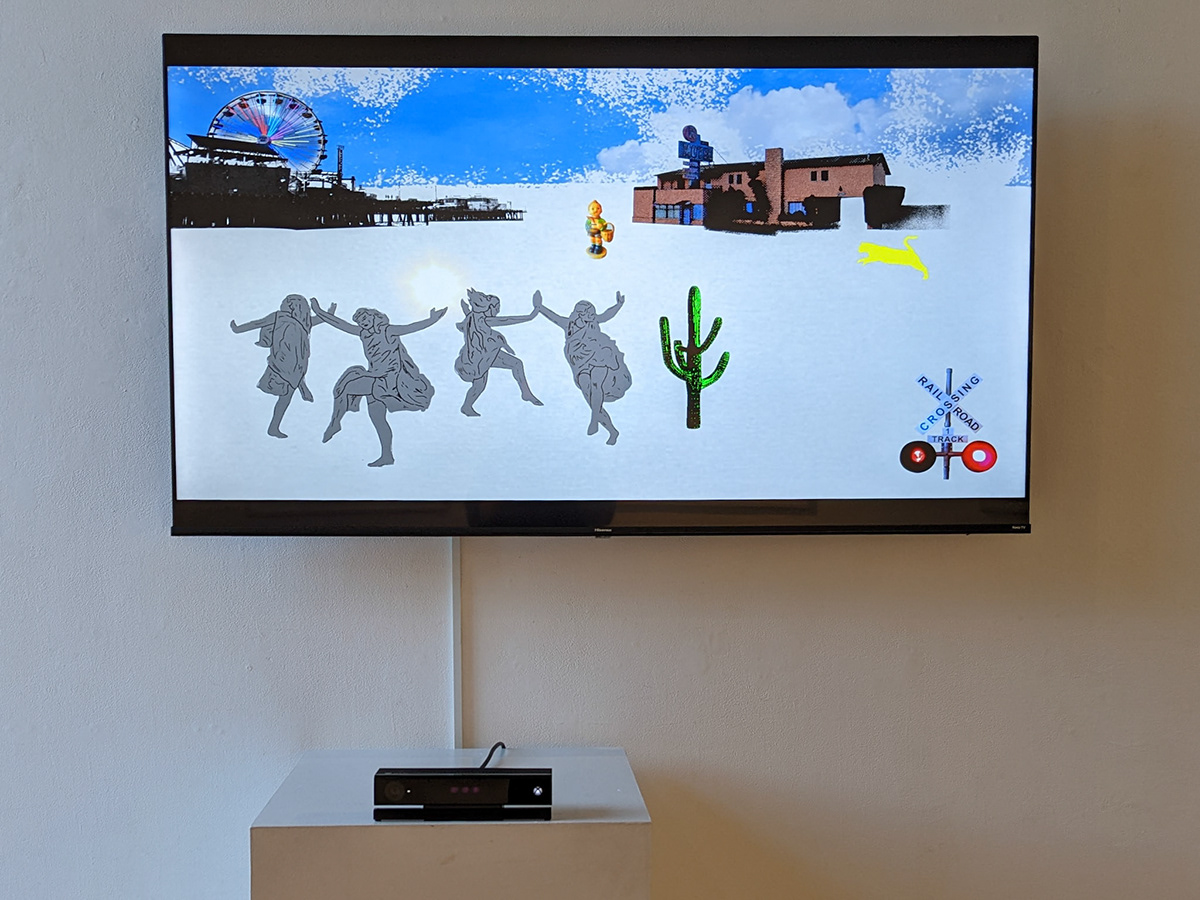
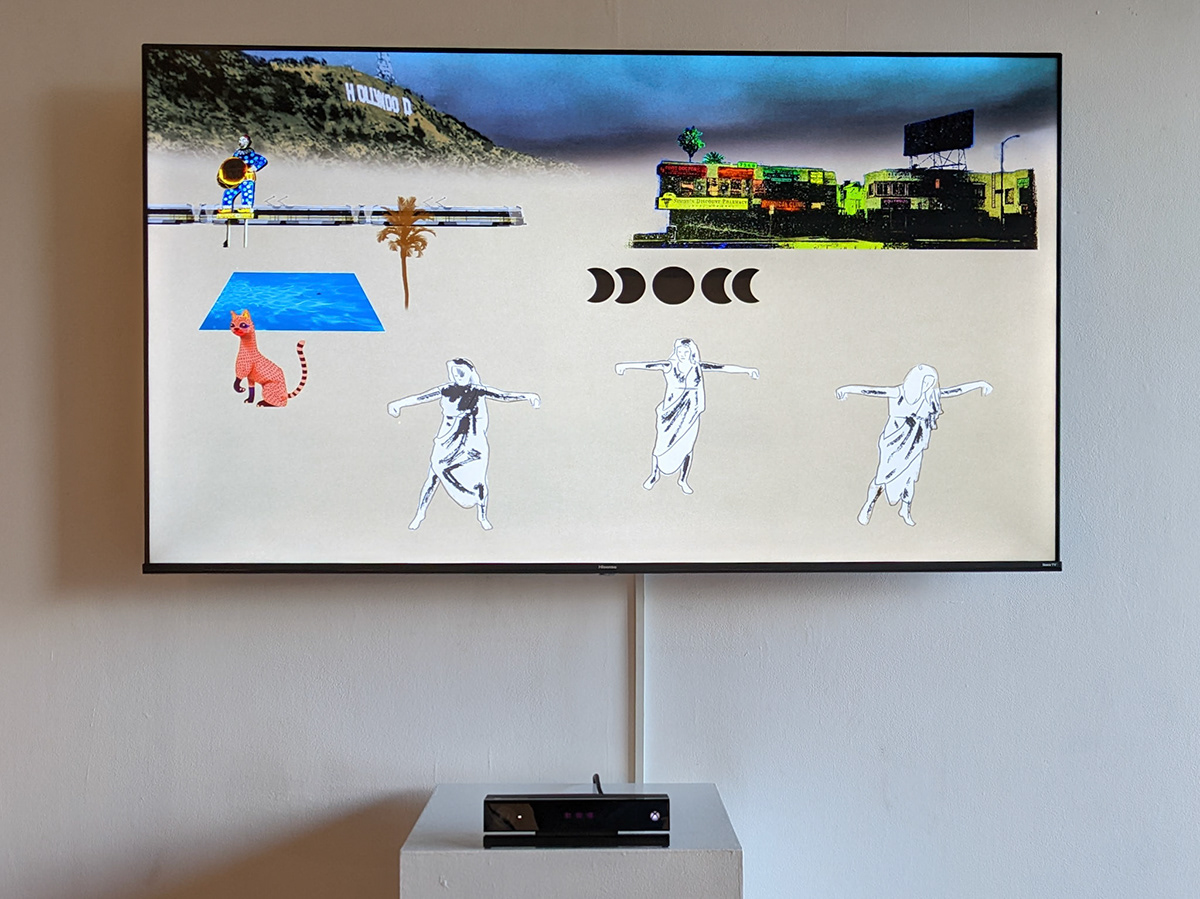
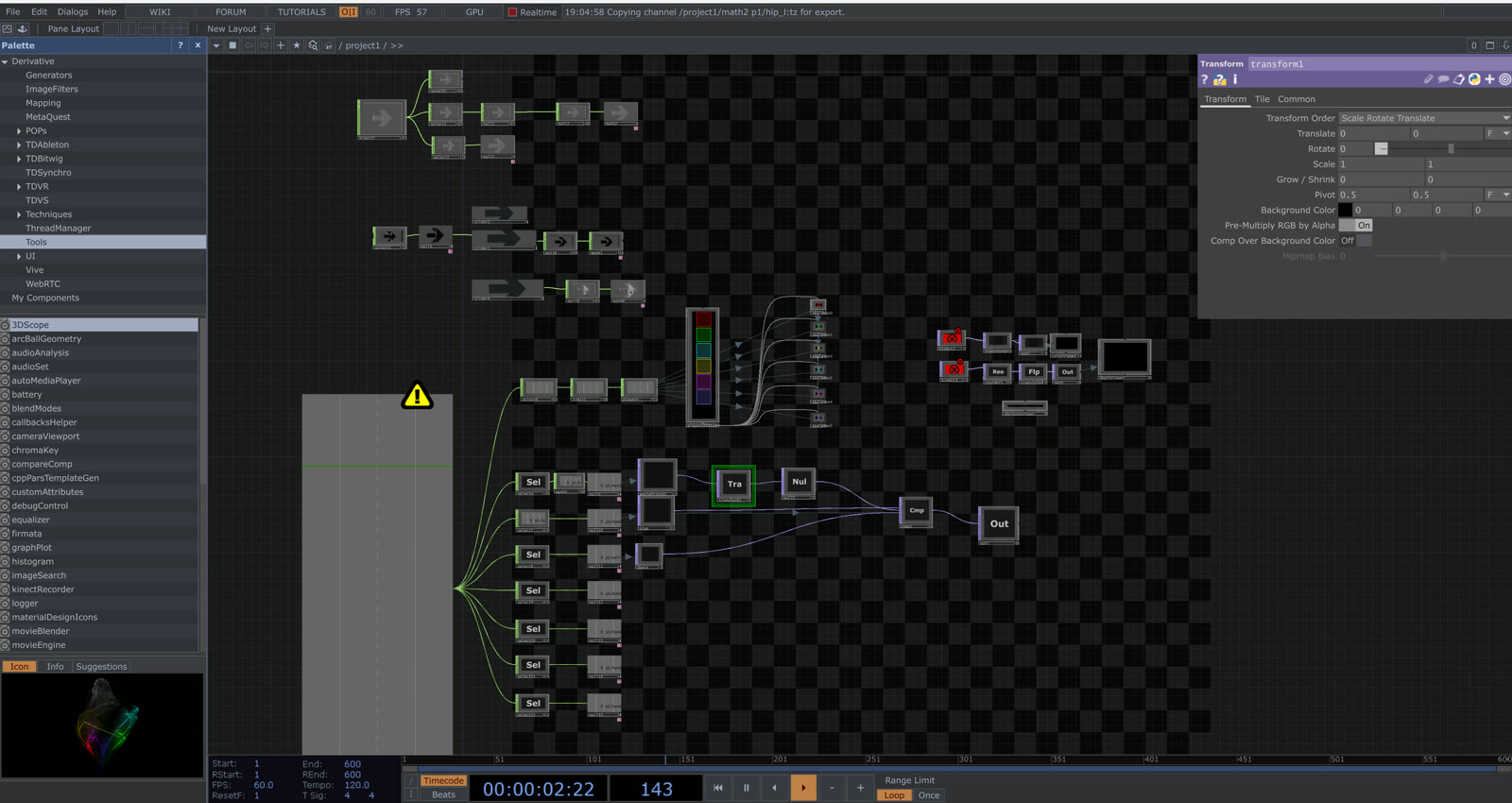
I collaborated with the artist Peter Wallis on this exhibition, bringing body and face tracking to his animated landscapes so that the scenes respond to the people standing in front of them. Every element in a scene responds to something different. Where you stand and how you move steers the figures, it knows whether you're looking at it, and it responds when you smile. Hold a dancing pose, and the dancers dance.
The work had to hold up in a gallery: mounted at viewing height, cabled out of reach, and running on its own all day with visitors coming and going. It was installed in two different configurations at the two venues.
The TouchDesigner network behind it. The fan of nodes splits the tracked skeleton into one branch per joint, and the status bar is exporting a left hip channel.
The two recordings below are from the Lois Lambert Gallery in November 2022. The first is the work running, and the second is the opening, with people in front of it.
Exhibited at Lois Lambert Gallery in Santa Monica and the Chaffee Art Center. More of the work is on my art portfolio.
Interactive Displays · 2021
Screens in a Building.
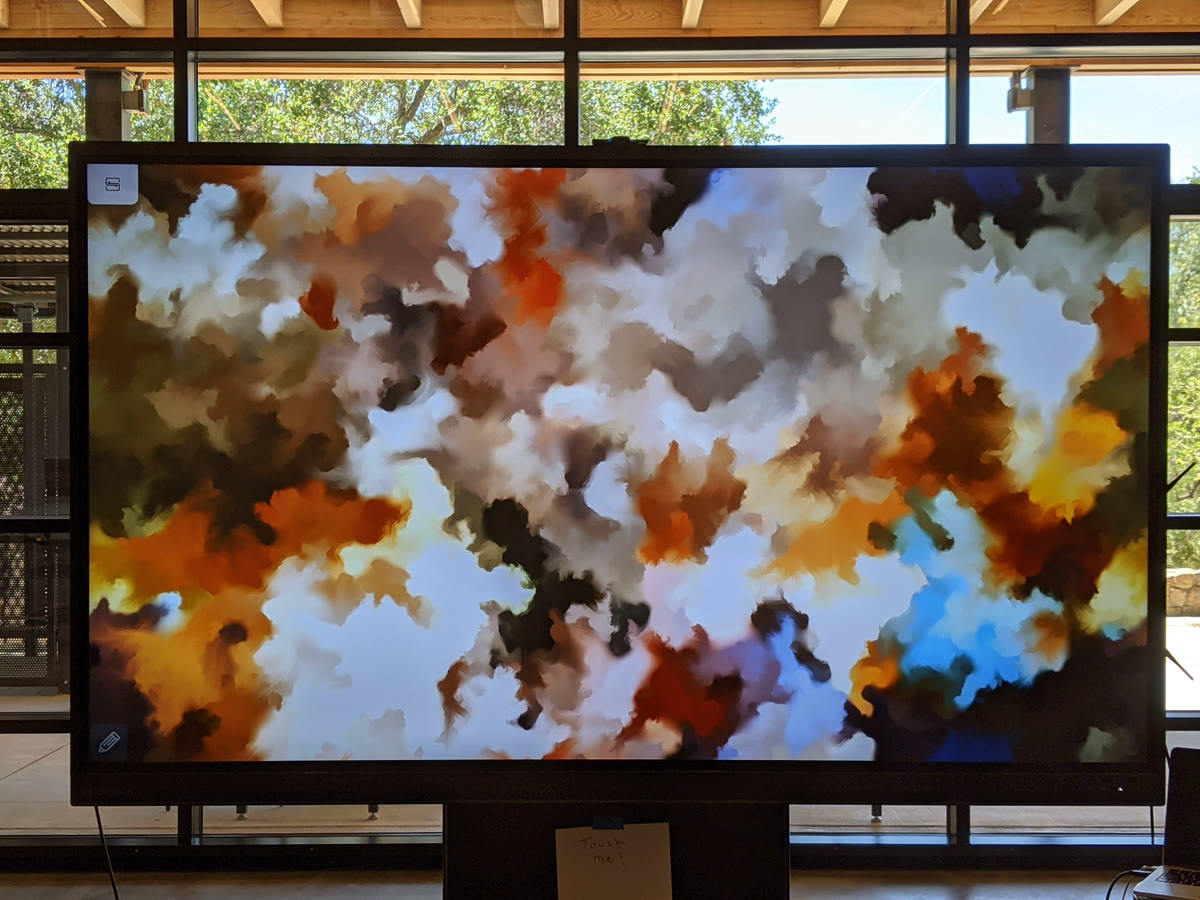
I made a series of works for the screens in a school's academic building, from the large screen in the lobby to others placed around it, most of them in TouchDesigner. They ran continuously through the day. Some responded to touch, and one rippled like reflections on water where you put a finger. Some read a webcam feed to detect movement and responded to it. Some used the webcam itself as source content, so the image was built from whatever the camera saw.
One of the touch screens. The card taped underneath is the whole instruction: Touch me.A second piece. The image never settled, so the screen kept changing while people walked past it.
Theater and Dance · 2013–2024
Projection Mapping and Live Visuals
I built sets for stage productions at a K–8 school (2021–2024), and designed visual effects and props for a high school theater program (2013–2018). On Metamorphosis and Sweeney Todd I did projection mapping, fitting projected imagery to the actual geometry of the set so that surfaces built out of flats and platforms could change what they were made of during a scene. The mapping is where the time goes: the projector has to be lined up against the built set, and anything that moves afterwards has to be lined up again.
The title sequence I animated for Sweeney Todd, projected in the house. The title holds long enough to read, then the blood covers it.
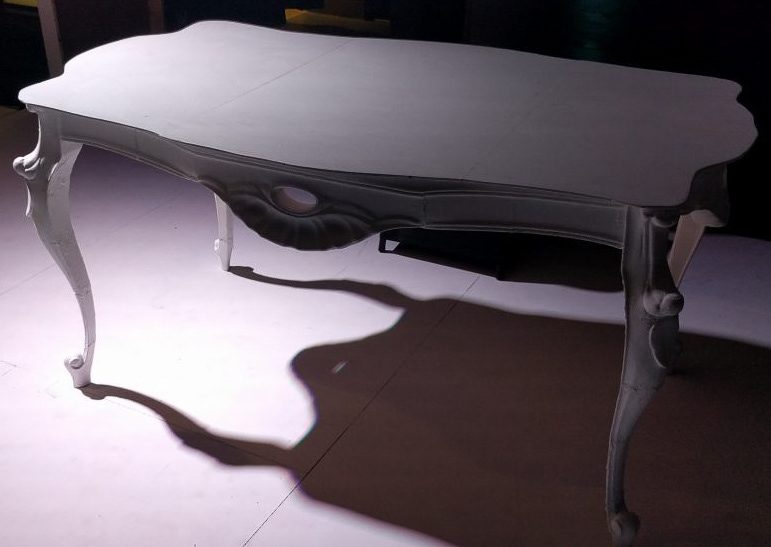
I did the visual effects for two dance performances. The first used animated backdrops and projections that I created from artwork the students in the company made, alongside a table I modelled and 3D printed for them to dance with. The second read the dancers themselves: a depth sensor tracked their movement, the visuals responded to it and to the audio, and I ran the effects live from the booth. Running the visuals live means I can follow the dancers as they move, and it also means there's no second take.
Katastrofi, 2017. The projections are animated from artwork the dancers in the company made.
At that school I was trained to operate the campus theater's Crestron control system and lighting and sound boards, and I ran special effects for multiple productions.
Part 1. The figures on the screen are the dancers themselves, read by the depth sensor and drawn back at the scale of the stage.
Part 2. Each section of the piece had its own treatment, which I changed live from the booth.
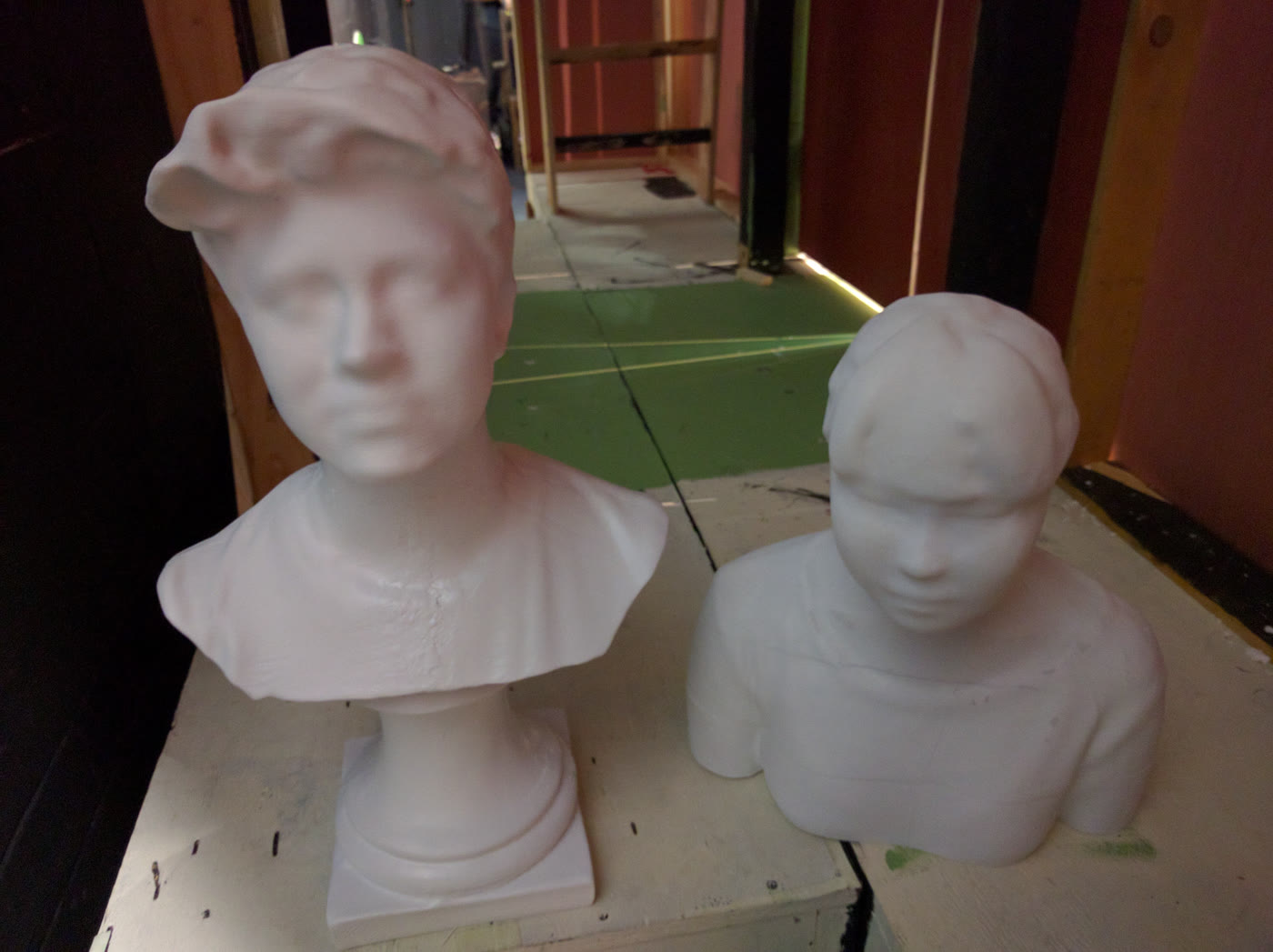
The table I modelled and printed for the dance piece, lit on the stage floor. The table had to read from the back row and survive being moved every night.Printed props backstage. These were built for the distance and the lighting they'd be seen in, and to survive being carried on and off every night.Fabrication and Teaching · 2013–Present
Fabrication and Makerspaces
I design and run makerspaces, and I teach the courses that fill them. Students build physical interactive work with microcontrollers, sensors, and fabrication tools, then show it publicly. I've handled the equipment side too: purchasing, installation, safety procedures, and training people to use it. I set up a high school makerspace from scratch (2013–2018), supported the launch of another school’s fabrication facility (2021) by installing equipment, coordinating purchases, developing safety procedures, and training faculty, and turned a third school’s makerspace into a working shop.
Installation & Teaching · Real vs Authentic · 2018
Real vs Authentic
I designed and ran this three-day off-campus program for a high school. It asked students to test the difference between something real and something authentic. We took that question through food, fashion, landscape, retail, news, music and tourism, and spent the days in places built to produce an experience: the IMAX VR centre on Fairfax, The Grove, the Wizarding World at Universal Studios Hollywood, and the Cuba Is exhibition at the Annenberg Space for Photography.
Between visits we ran experiments on perception: miracle berries rewired sour tastes for about an hour, so a lemon tasted sweet. I built the program's two centerpieces myself, and both played with time and sound.
A room projected back onto its own walls, on a delay.
The room let you stand inside a copy of the room you were already in. Webcams watched it and projectors threw the footage back onto the walls on a short delay, so when you walked in you saw the room you were standing in a moment behind. A paired audio piece played your own voice back through headphones on a delay timed to make it hard to keep talking. Both halves put you slightly out of step with yourself.
Someone standing inside the projection with the headphones on. The chairs around them are the room, and the chairs in the projected image are the same room a moment earlier.
Designing the program meant deciding which engineered experiences were worth three days of a student's attention, and then building two of my own so the students could take them apart from the inside. That's the same judgement exhibit design takes.
Get in Touch.
I am happy to walk through any of this work in more detail, including the parts that did not work the first time.