Overview

A Shop That Plays Back.

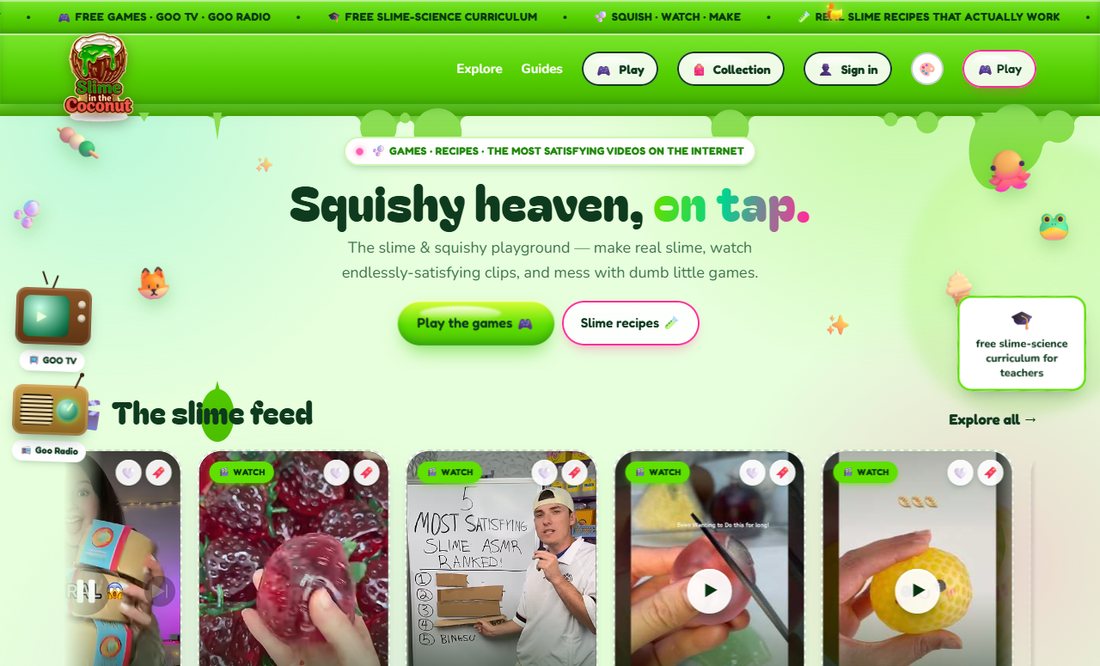
Most online shops are a grid of products and a checkout button. Slime in the Coconut sells the trending squishies, slime, plushies, and fidget toys you'd expect — but the real point is that the catalog itself is a toy. Every product doubles as a game piece, and the store has a cast of characters instead of a spreadsheet.

It's honest about its roots: it began as a straightforward e-commerce build (the same store engine I first wrote for the CosNFX shop) and grew into a little slime hub with features a normal storefront doesn't bother with.

The Selling Point

The Fun Part

Three playful systems turn browsing into something you actually want to poke at.

Characters

The Goo Crew

A cast of slime mascots — like Glimmer, a fortune-telling Galaxy Glitter Slime — each with its own face, colours, and personality, and each tied to a real product. They greet you and chatter while idle, so the store has a voice instead of reading like a database.

Mini-game

Squish Battle

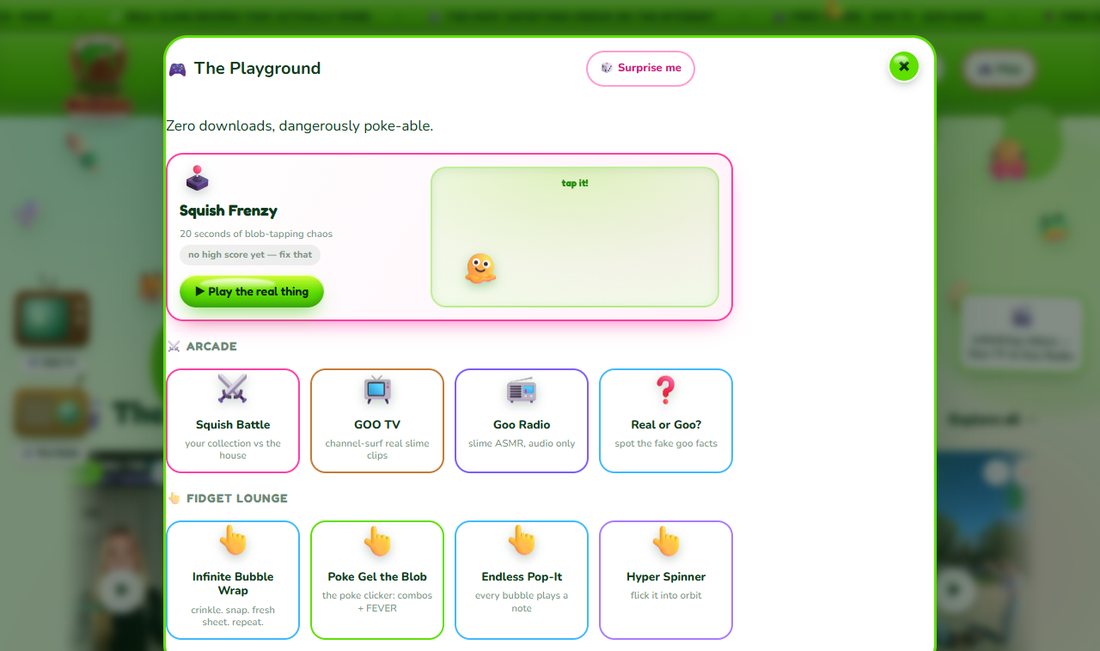
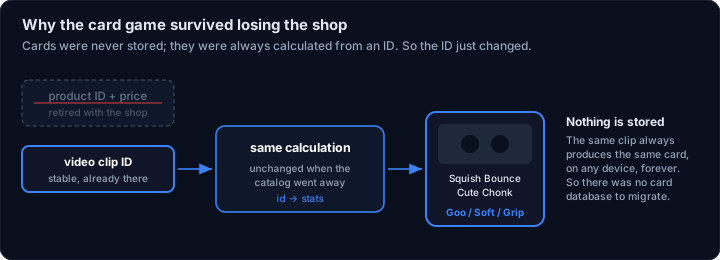
Every product secretly doubles as a battle card. Its stats — Squish, Bounce, Cute, Chonk — are generated from the product's ID, so the same squishy always has the same card (nothing is stored). Cards sit in a Goo → Soft → Grip triangle, rarity comes from price, and you pick three to battle the house. No money, all glory.

Collecting

My Collection

Mark the squishies you have and the ones you want, and the store remembers — building a personal collection you can then bring into Squish Battle. Gotta squish 'em all.

The Build

A Store That Fulfills Itself

Under the games is a deliberately small, self-hosted store: a plain website plus one small server (Node/Express) that runs payments through Stripe. Two engineering pieces do the heavy lifting.

Automation

Order → Supplier, Automatically

These are dropship products — a real supplier ships them. When a customer pays, Stripe sends a verified notification and the backend places the matching order with the supplier (SUNSKY's Open API) on its own, no manual step. It's idempotent, so a webhook retry can never double-order, with a second supplier (CJ Dropshipping) and a manual queue as safety nets.

Security

Prices the Browser Can't Touch

A classic storefront mistake is trusting the price the browser sends. Here every price is server-authoritative: the client says what you want to buy, never what it costs. The checkout total is rebuilt on the server from the real catalog, so a tampered request is simply rejected.

Honest status

The platform is built and the fun features are live; it runs the Slime in the Coconut brand at slimer.store. It's the same store engine I first built for the CosNFX shop, re-skinned and extended into its own thing.